News from Jerusalem

Friday
Nov 20th
Text size
  • Increase font size
  • Default font size
  • Decrease font size
News from Jerusalem Conflict Conflict Security and Defense: Hizb'allah's rise from the ashes

Security and Defense: Hizb'allah's rise from the ashes

Hizbullah flag Lebanon border IsraelThey show up along the Lebanese border in Land Rovers. One time they'll roll down the window, lift a camera with a long lens and snap a few pictures of an IDF outpost on the other side of the border before driving away. Other times, they will get out and stroll along the border, right next to the UNIFIL and Lebanese Armed Forces (LAF) positions.

While the men don't wear Hizb'allah uniforms, the IDF has no doubt that they belong to the Iranian-backed Shi'ite guerrilla group. On rare and lucky occasions, IDF cameras catch a face of a known Hizb'allah operative.

These Hizb'allah operatives are not alone. On some tours they take with them groups of foreigners, sometimes members of the Iran's Revolutionary Guards.

This is the reality along the northern border three years after the Second Lebanon War - Hizb'allah may not maintain overt military positions like it did before 2006, but it is still there, growing stronger by the day.

According to Israeli estimates, Hizb'allah today has somewhere between 30,000 and 40,000 rockets of various ranges that could reach from Kiryat Shmona in the North to Dimona in the South and the sensitive nuclear reactor nearby.

Since the war and the extensive damage caused to its infrastructure in Beirut and southern Lebanon, Hizb'allah has been engrossed in rehabilitating its military wing. Today, its presence in southern Lebanon is mainly inside villages - Shi'ite and non-Shi'ite - not in the nature reserves where it was heavily deployed before the war.

Aircraft carrying weaponry for Hizb'allah arrive in Beirut fairly frequently. Some of them originate in Iran and Syria, its main suppliers of weapons; others come directly from Eastern European countries that manufacture the anti-tank missiles and Katyusha rockets its forces depend on.

The IDF was surprised by Hizb'allah's possession of the Chinese-made radar-guided C-802 that hit the Hanit missile ship in the beginning of the war, killing four sailors, so the current assessment in Military Intelligence is that "whatever Iran and Syria have, Hizb'allah could have."

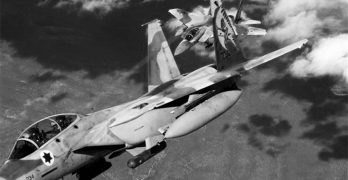
The operational impact is significant. In a future conflict, navy ships will likely have to patrol the Lebanese coast from greater distances than in the past; the IAF, which still flies over Lebanon to collect intelligence, flies at higher altitudes; and while Israel does not believe that Syria has transferred Scud missiles to Hizb'allah, which could draw a preemptive strike, such a possibility is not far-fetched in the event of a new conflict.

"It is just a seven-hour drive from Damascus to the Hizb'allah stronghold in the Bekaa Valley," explained one senior defense official.

During the war, the IDF was impressed by the command-and-control capabilities Hizb'allah retained until the end of the war. This was demonstrated by Sheikh Hassan Nasrallah's ability to turn the rocket fire on and off, as he wished, even though he was deep inside a bunker somewhere in Lebanon.

Hizb'allah is believed to have improved this capability and has worked to establish a semi-military framework for its forces. Instead of bases, it has a battalion-sized force, split into smaller units, deployed in villages. At the top are the regional commanders.

But while Hizb'allah has taken on more characteristics of a conventional-looking military, it does not use traditional military jargon. This is in contrast to Hamas in the Gaza Strip which actually calls its battalion commanders "battalion commanders." Hizb'allah stays away from the jargon to maintain a semblance of a resistance organization made up of freedom fighters.

Despite this, Hizb'allah has encountered difficulty in filling its ranks since the war and according to updated Israeli estimates, is missing several hundred fighters as well as a significant number of platoon and company commanders.

One of the reasons Lebanese are not enlisting is their disappointment with Hizb'allah, which had promised to rebuild people's homes that were destroyed during the fighting but never did.

While Nasrallah is still officially in charge, Iran is believed to have solidified its control over Hizb'allah since the war because, to some extent, it blames Hizb'allah for turning the spotlight on their relationship when it decided to kidnap IDF reservists Eldad Regev and Ehud Goldwasser on July 12, 2006 and draw Israel into a war. Iran does not want to be surprised again, and it cannot be ruled out that Iran's control also manifests itself in its refusal to allow one person to replace Imad Mughniyeh, the Hizb'allah military chief who was killed in a meticulously-planned car bombing - attributed by foreign reports to the Mossad - in the heart of Damascus in February 2008.

Mughniyeh was perceived to have too much power since he was in charge of Hizb'allah's military arm, was the liaison to the Iranian Revolutionary Guards, Hamas and Islamic Jihad and was also commander of its extensive international infrastructure and terror cells. So instead of appointing a single successor, the Iranians split up his responsibilities between a few people.

Hizb'allah is still trying to avenge the assassination. According to foreign reports, it was behind a thwarted attempt earlier this year to attack the Israeli embassy in Azerbaijan. The group has also tried using Palestinian proxies to launch attacks within Israel without success. This frustration, Israel fears, might lead to a decision to launch a retaliatory attack against the northern border.

In addition, assessments are that while Hizb'allah is heavily deployed throughout southern Lebanon, its control over the territory is not as complete as it was from 2000, after the IDF withdrawal from Lebanon, until the war. One clear indication was provided during Operation Cast Lead in the Gaza Strip when a number of rockets were fired into the North from Lebanon. The perpetrators were fringe Palestinian groups which Hizb'allah apparently does not control.

According to some assessments, Hizb'allah was even taken by surprise by the rocket fire. This shows that the UNIFIL and LAF presence in the south are having an impact on its ability to maneuver.

Hizb'allah's rehabilitation efforts have not been limited to its military wing; it has also invested tremendous resources in an effort to boost its political power as seen in the last month's Lebanese parliamentary elections. Contrary to widespread predictions, included some here, Hizb'allah lost to the Western-backed anti-Syrian camp led by Sa'ad Hariri.

However, the possibility still exists that Hizb'allah will join the new coalition and be able to influence policy. For that reason, Prime Minister Binyamin Netanyahu told the cabinet on Sunday that "if Hizb'allah joins the Lebanese government, then the Lebanese government is accepting responsibility for Hizb'allah's actions, including its actions against Israel."

But according to assessments in Northern Command, Hizb'allah was not really aiming to win the elections but to use them as a springboard for the next elections, four years from now.

If it joins Hariri's coalition, it will use its power to change the election system, which currently elects the parliament based on a multi-member constituency system, to increase its potential power base.

Northern Command also believes that the Hariri camp's victory was made possible by Lebanese frustration and public disappointment with Hizb'allah and the devastation it brought upon the country during the war.

This lack of public support creates Hizb'allah's continued identity crisis. On the one hand, it believes in the destruction of Israel and there comes a point when words need to be translated into action. On the other hand, Nasrallah is attracted to the possibility that he could one day take over the entire country in a democratic process, like Hamas did when it defeated Fatah in 2006. Another war with Israel could ruin those chances.

jpost

Trackback(0)

TrackBack URI for this entry

Comments (0)

Subscribe to this comment's feed

Show/Hide comments

Write comment

smaller | bigger
security image
Write the displayed characters

busy
 

He shall set up an ensign for the nations, and shall assemble the outcasts of Israel, and gather together the dispersed of Judah from the four corners of the earth. (Isaiah 11:2)

Gift of the week from Jerusalem!

Hebrew Scripture Ring
Jeremiah 31:7 'O Lord Save Your People' - Hebrew Scripture Ring

'O Lord Save Your People' written in Hebrew on this sterling silver scripture ring with a 14 carat gold star of david

click link for our Hebrew Scripture Ring

Weekly Torah Portion

Parashat HaShavua Toldot / Generations
Y BeReshit / Genesis 25:19-28:9
Y Mal'achi / Malachi 1:1-2:7
Y Romim / Romans 9:6-13

allah-is-not-abba

Pray for the IDF as they guard Israel's borders

Videos - Are we getting it yet?

Subscribe to Jerusalem News

For an unbiased, biblically correct report on current news events from Israel, and Special Offers from our Store.
*  Name:
*  Your email address:
*  Enter the security code shown:
To unsubscribe from Jerusalem News Report click here

Jerusalem Gift Shop Affiliate Program

Support Israel and prosper!
  Support Israel & prosper!

For Jerusalem News... Follow us on Twitter

Follow Jerusalem News on Twitter

Gifts from Jerusalem


Clay Oil Lamp with Jar and Olive Oil

Set includes: Clay lamp replica from period: 50 BC to AD 50 - hand made in Jerusalem ...


Isaiah 41:10 ring

The Star of David has a genuine deep blue saphire mounted in center hand made in Jeru...


Anointing Oil

Click here to buy now....


Biblical Hebrew Software

Click here to buy now....


Wars of Israel DVD

The Sinai Campaign of 1956, the War of Attrition from 1967-1970, and the invasion of Leban...


Isaiah 62:1 Hebrew Scripture Pendant

For Zion's sake I will not keep silent, for Jerusalem's sake I will not remain quiet, till...

In Our Store

Christian Jewelry
selected from many sources here in Jerusalem
Christian Music
Praise worship and intercession from Israel
Israeli T-Shirts
Made in Israel - Hebrew scripture designs!

Polls

Should Israel Be Divided?
 

Who's Online

We have 106 guests online